
When a washing machine won’t drain—or refuses to spin—laundry day stops cold. The good news: most issues are simple, safe DIY fixes with a towel, a bucket, and a bit of patience. This guide walks you through the most common problems and their solutions, starting with the quick wins and moving toward parts that may need replacement.
Safety first: Unplug the washer before removing panels or reaching inside. Turn off the water supply for any hose work. Keep towels handy; some water will spill.
The Most Common Problems and How to Fix Them
1) Unbalanced or Overloaded Drum
Problem: Washer stops before spin or spins slowly; thumping or “UL/UE” error codes.
Why it happens: Heavy items (blankets, rugs, towels) bunch on one side; the control halts spin to protect the motor.
Fix:
- Pause cycle, redistribute items evenly.
- Wash large items with a few small items to balance weight.
- For top-loaders, ensure water level matches load size.
2) Kinked or Clogged Drain Hose
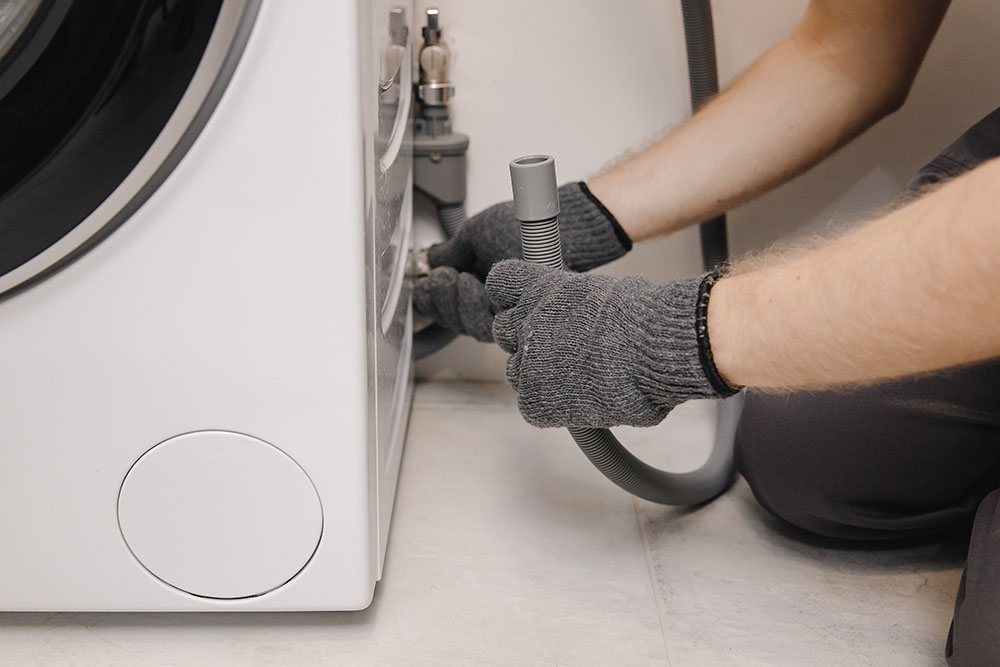
Problem: Water remains in drum; machine pauses on drain step.
Why it happens: Hose pinched behind the machine or clogged with lint/coins.
Fix:
- Pull the washer forward and straighten kinks.
- Detach the hose from both ends (bucket ready). Flush with warm water or a long flexible brush.
- Re-install with a high loop and ensure the hose end is 8–12 in (20–30 cm) into the standpipe (not sealed).
3) Pump Filter / Coin Trap Blocked (Front-Loaders)
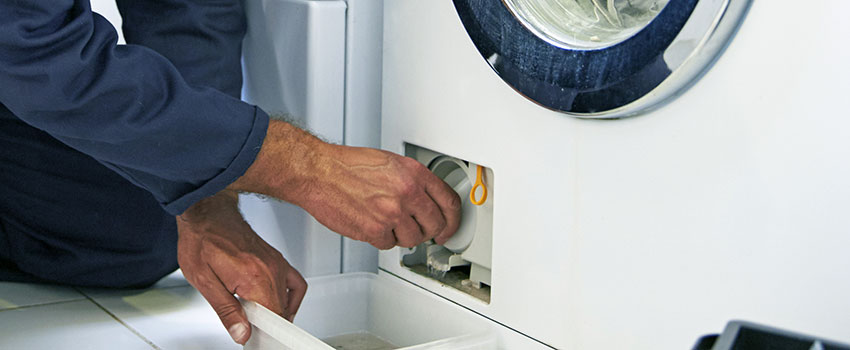
Problem: Slow drain or “drain error”; small items jam the pump.
Fix:
- Open the service panel near the bottom front.
- Place a tray/towels, twist out the filter cap slowly, and remove debris (buttons, hair ties, lint).
- Rinse filter, inspect the pump impeller (should spin freely), and reassemble.
4) Faulty or Dirty Lid Switch / Door Lock
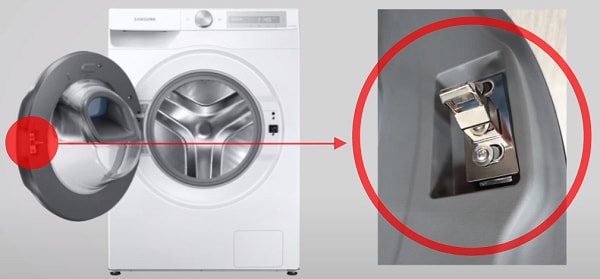
Problem: Washer fills and agitates but never spins; door won’t “lock” indicator.
Why it happens: A worn microswitch, broken latch, or misalignment.
Fix:
- Listen for the lock click when starting spin.
- Clean latch area; check for broken plastic tabs.
- If the switch fails continuity (multimeter), replace the lock assembly (usually 2–4 screws and one harness).
5) Excessive Suds (Wrong or Too Much Detergent)
Problem: Sudsy water lingers; spin cycle cancels; “Sd/SUD” errors.
Fix:
- Use HE (high-efficiency) detergent on HE machines.
- Run a Rinse/Spin or Drain & Spin to clear suds.
- In future, use half the usual dose, especially in soft water.
6) Clogged Standpipe or Household Drain
Problem: Hose and standpipe overflow; water backs up; repeated drain failures.
Fix:
- Remove the washer hose and snake/clear the standpipe.
- Ensure the standpipe is 18–30 in (46–76 cm) above the trap and not airtight at the top.
7) Drain Pump Obstruction or Failure

Problem: Loud humming from pump, no water movement; burned smell.
Fix:
- Inspect via pump filter (front-load) or bottom panel (top-load).
- Remove obstructions from the impeller.
- If impeller is broken, seized, or pump has no continuity: replace the pump.
8) Pressure Switch / Water Level Sensor Issues
Problem: Washer “thinks” it’s still full; won’t shift to spin.
Why it happens: Clogged air dome hose or faulty pressure sensor.
Fix:
- Locate the thin rubber tube from the tub to the sensor; detach and blow through gently to clear.
- Check connections; if sensor tests faulty, replace.
9) Drive Belt (Belt-Driven Models)
Problem: Drum won’t spin; motor runs but tub doesn’t move.
Fix:
- Unplug, remove rear panel.
- Inspect belt for cracks or glazing; ensure proper tension.
- Replace belt if worn; align on pulley grooves.
10) Motor Coupler (Certain Top-Loaders)
Problem: Agitates or hums but no spin; small plastic/rubber fragments under unit.
Fix:
- Access the coupler between motor and transmission; replace broken hub/rubber disc set.
11) Control Board or Timer Fault
Problem: Randomly stops before drain/spin; erratic behavior; codes you can’t clear.
Fix:
- Try a hard reset: unplug 5 minutes, then plug back.
- Update or reprogram if your brand supports it.
- If burning marks or swollen components are visible, consider board replacement or call a pro.
When to Call a Pro
- Persistent error codes after basic checks
- Burning smells, tripped breakers, or visible arcing
- Bearing noise, leaking seals, or failed control boards
- Machine is still under warranty (avoid DIY that may void coverage)