
Uneven heating on an electric cooktop is more than an annoyance. It ruins cooking results, wastes energy, and may signal a failing part. Below is a clear, step-by-step guide to help you understand what’s happening, what you can safely check yourself, and when it’s time to book professional service.
Safety First
Before any checks:
- Turn the burner controls to OFF.
- If you need to touch or move parts of the cooktop, switch off power at the breaker.
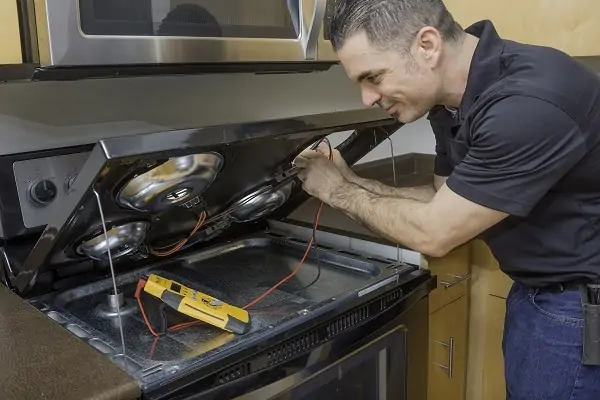
- Do not open the cooktop or touch internal wiring unless you are a qualified technician.
If you smell burning plastic, see smoke, or hear buzzing from inside the cooktop, stop using it immediately and contact a technician.
Common Causes of Uneven Heating
1. Wrong or Poor-Quality Cookware
- Pan base smaller than the burner circle.
- Pan warped, with a rounded or “rocking” bottom.
- Very thin or low-quality metal that distributes heat poorly.
Even a perfectly working burner will seem uneven if the pan doesn’t sit flat or conduct heat well.
2. Dirty Surface or Residue
Burnt-on food, grease, or melted plastic between the glass top and the pan can create hot and cold spots. On some models, heavy residue can also interfere with sensors under the glass.
3. Power Supply Issues
If one burner is weak and others also seem “off” or slow:
- The cooktop may be on a shared or overloaded circuit.
- A partially tripped breaker can cause low or unstable voltage.
- A loose power connection at the outlet or junction box can affect performance.
4. Failing Heating Element
For radiant or coil elements, common signs of a bad element:
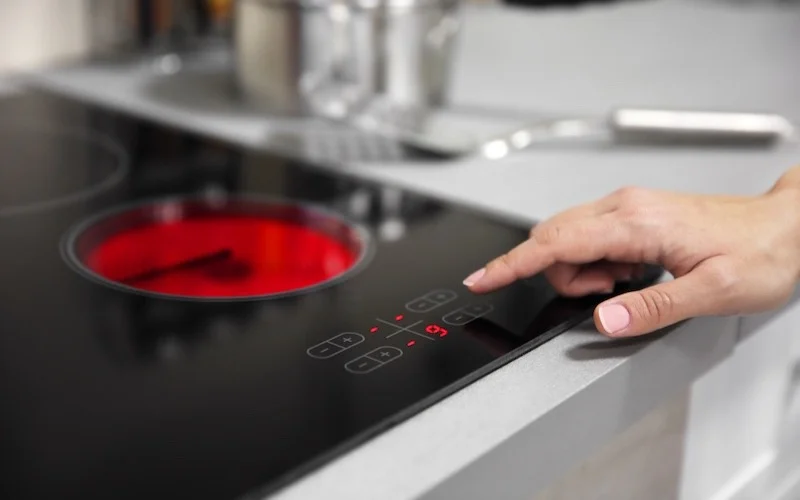
- Only part of the ring glows red.
- The burner cycles on and off too quickly.
- It takes much longer than usual to boil water on that burner only.
5. Faulty Controls or Sensors
Depending on the model, uneven heating can also be caused by:
- A worn infinite switch (the knob that controls power level).
- A faulty temperature sensor or thermostat.
- A failing electronic control board.
These issues usually require professional diagnosis and replacement.
Step-by-Step Troubleshooting You Can Do
Follow these checks in order, from simplest to more involved.
Step 1: Test With the Right Pan
- Choose a flat, heavy-bottomed pan that matches the burner size.
- Add a thin layer of water and set the burner to medium.
- Watch how the water bubbles:
- Bubbles only in one area → likely uneven heating or bad cookware.
- Bubbles evenly across the base → burner is probably fine; issue may be with your usual pan.
If your original pan is warped or very thin, replacing it may solve the problem.
Step 2: Clean the Cooktop Thoroughly
- Let the cooktop cool completely.
- Wipe the surface with a soft cloth and a suitable cooktop cleaner.
- Carefully remove burnt-on residue with an approved scraper if your model allows it.
- Dry the surface fully before using the burner again.
Re-test the burner after cleaning. Residue and grease can noticeably affect heat distribution.
Step 3: Check for Obvious Damage to the Element
Only do this if your model allows safe visual access without disassembly.
- For exposed coil elements:
- Unplug the cooktop or switch off the breaker.
- Remove the coil (if removable) and inspect for cracks, bulges, or burn marks.
- Re-seat it firmly and test again.
- For glass-ceramic radiant elements:
- Look through the glass while the burner is on medium.
- If only part of the ring glows, the element may be failing.
Do not open the glass top or touch internal parts. That should be done by a technician.
Step 4: Reset the Power
Sometimes control boards glitch and mismanage power to the element.
- Turn all burners OFF.
- Turn the cooktop off at the breaker.
- Wait 2–3 minutes.
- Turn the breaker back ON.
- Test the problematic burner again with the same pan and water test.
If the issue disappears after a reset, it may have been a temporary control fault. If it returns quickly, there is likely an underlying component problem.
When to Call a Professional Technician
Stop DIY troubleshooting and contact a professional if:
- Only part of a radiant ring glows, or the coil is visibly damaged.
- The burner overheats, cycles erratically, or causes food to burn even on low settings.
- Multiple burners behave inconsistently.
- You see scorch marks, melted components, or smell burning from inside the cooktop.
- The breaker trips when you use the affected burner.
At this stage the issue is usually a failing element, control switch, sensor, or internal wiring. These repairs require tools, parts, and safety checks that go beyond home troubleshooting.
If you are in the Vancouver area and need fast, reliable service, schedule professional cooktop repair to diagnose and fix the problem correctly.