
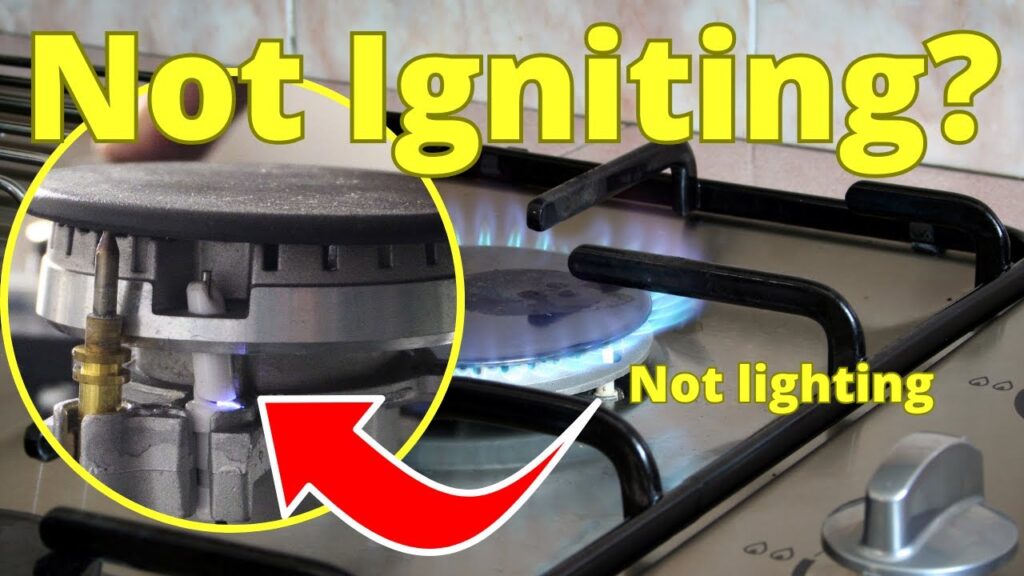
If your gas stove clicks but never lights—or doesn’t click at all—you can usually trace the issue to a few predictable culprits. This guide walks you through fast safety checks, how ignition works, the top causes, and step-by-step DIY fixes. We’ll also flag the problems that are best left to a professional.
Need a technician now? Book reliable stove repair in Vancouver.
First: Quick Safety Checks
- Ventilate: Open a window. If you smell strong gas, stop, turn off the burner, and avoid sparks or flames.
- Power matters: Most gas igniters need electricity. Make sure the stove is plugged in, the breaker isn’t tripped, and any child-lock features are off.
- Cool & dry: Let the cooktop cool and disconnect power before cleaning or removing parts.
How a Gas Burner Ignites (30-Second Primer)
- Turning the knob opens the gas valve and closes a spark switch.
- The spark module sends rapid pulses to the igniter electrode, creating a visible spark at the burner.
- The gas/air mix contacts the spark and ignites; the flame sensor (often the igniter itself) confirms the flame.
Knowing these parts helps you pinpoint where things go wrong.
Symptom → Likely Causes → DIY Fix
1) No Click, No Spark
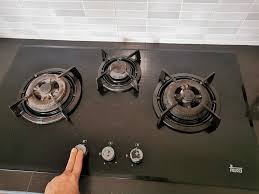
Likely causes
- Cooktop not getting power
- Tripped breaker or GFCI
- Faulty knob switch or spark module (less common)
DIY fixes
- Confirm outlet power (try another appliance).
- Reset the breaker/GFCI.
- Pull the knob straight off and ensure the stem turns freely; if the burner works when you try a different knob on the same valve, the original knob’s switch may be failing (pro repair recommended).
2) Clicking, But No Flame
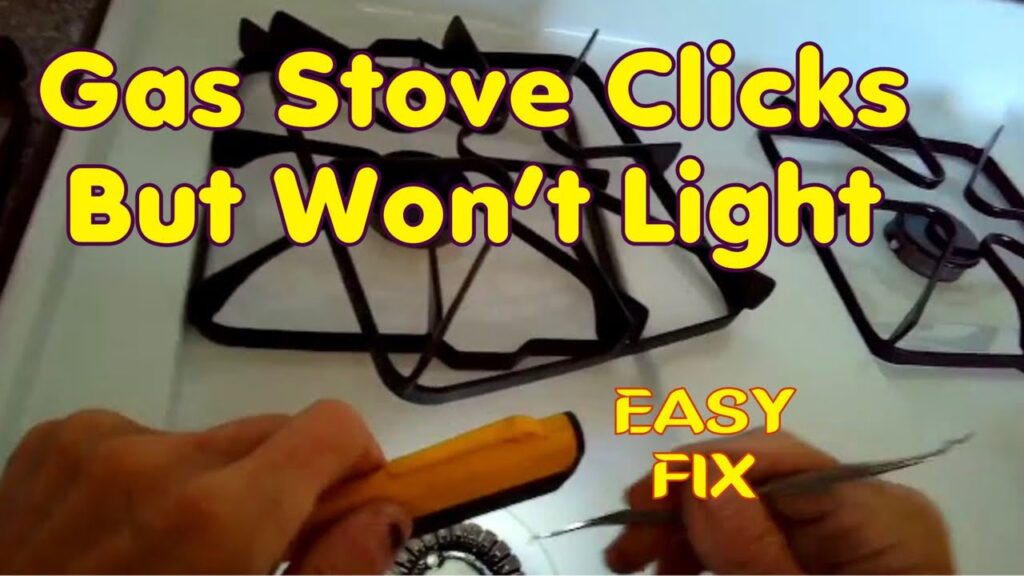
Likely causes
- Wet or dirty igniter from spills/cleaning
- Clogged burner ports (grease, food debris)
- Misaligned burner cap blocking gas flow
- Low gas supply (valve partially closed)
DIY fixes (in order)
- Dry the igniter: Dab the ceramic and metal tip with a dry paper towel; let air-dry 30–60 minutes.
- Realign the cap: Seat the burner cap so it’s flat and centered—no rocking.
- Clear burner ports:
- Remove cap and burner head.
- Use a soft brush or wooden toothpick to clear tiny side ports (never metal that could widen holes).
- Rinse, dry completely, reassemble.
- Check gas valve: Verify the supply valve is fully open (handle parallel to the pipe).
3) Weak, Yellow, or Wandering Flame
Likely causes
- Partially clogged ports
- Cap not seated / uneven
- Excess moisture from recent cleaning
- Incorrect air-to-gas mix
DIY fixes
- Repeat the port cleaning and cap realignment steps above.
- Let the burner parts dry fully.
- If flames stay yellow or lift off the ports, the air shutter may need adjustment—call a pro to set combustion properly.
4) One Burner Won’t Ignite, Others Are Fine
Likely causes
- Localized debris or a damaged electrode on that burner
- Wire to that igniter loose
DIY fixes
- Swap the cap and burner head with a known-good burner. If the problem moves with the parts, clean/replace those parts.
- Inspect the igniter electrode: it should sit ~2–4 mm from the burner rim. If cracked, chipped, or loose, have it replaced by a technician.
5) All Burners Click Forever (Ignite, then keep clicking)
Likely causes
- Moisture bridging the igniter
- Sticky or shorted spark switch
DIY fixes
- Unplug the stove and let it dry. A gentle fan speeds this up.
- If clicking persists when any knob is off, a switch may be shorted—pro service advised.
6) Burners Light Only with a Match
Likely causes
- Failed spark module or no power to module
- Broken wiring harness
DIY fixes
- Recheck power and breakers.
- If there’s power and multiple burners need a match, the spark module is suspect. Schedule a professional diagnosis and replacement.
Tools & Supplies You’ll Need
- Paper towels or microfiber cloth
- Soft brush + wooden toothpicks
- Warm, soapy water (no harsh abrasives)
- Non-scratching pad
- Flashlight
- Optional: compressed air (gentle bursts)
When to Call a Professional
- You smell gas continuously or see damaged gas lines
- Repeated ignition failures after cleaning/alignment
- Cracked igniter ceramics or exposed wiring
- Suspected spark module, valve, or regulator faults
- Yellow, sooty flames that don’t resolve after cleaning
In Greater Vancouver, book fast, expert help here: Vancouver Appliances – Stove Repair.